





The Nicean classification. See how to choose it well

The Nice Classification is one of the most important systems used in the trademark protection process. Its main purpose is to organize goods and services for which trademarks are registered in a uniform and understandable manner. This makes it possible to precisely define the scope of trademark protection. In practice, the Nice Classification forms the basis of every trademark application – without correctly indicating the classes, effective registration is not possible.
What is an industrial design?

Trademark – what is it and how to protect it?

A trademark is one of the most valuable assets of a business. In practice, it is the trademark that allows customers to distinguish one offer from another, even when the products are similar and the prices are comparable. A well-designed and properly protected trademark can build the value of a company for many years, while neglect at this stage often leads to costly disputes or the need for rebranding.
What do TM, R, C, SM mean next to a company name?
Company names, logos, slogans, product packaging – we see these mysterious symbols next to them almost every day: TM, ®, ©, SM. For some, it’s just a marketing detail; for others, it’s proof of “legal protection.” The truth lies somewhere in between – and it can be surprising.
We often hear the question: does the symbol itself protect the brand? The answer is: not the symbol, but the law – and the symbol simply indicates what stage of protection we are at.
How to patent a utility model and protect yourself from competition?
A utility model is one of the most underrated tools for protecting technical solutions. It is often confused with a patent or treated as a “weaker version” of protection, but in practice, it can very effectively protect a product from competition, especially when quick response time and real protection of functional solutions are important.
Below, we show how to register a utility model in a conscious way, when it makes sense, and how to use it to protect against copying by competitors.
Examples of trademarks – see what you can register

Trademarks are a fundamental tool for identifying products and services in the market. Their primary function is to distinguish the goods or services of one company from those of its competitors. A properly selected and registered trademark allows for effective legal protection, strengthens brand recognition, and increases its market value. Legal regulations allow for various types of trademarks, including both traditional and unconventional marks.
Trademarks – see what types of trademarks exist and how they differ
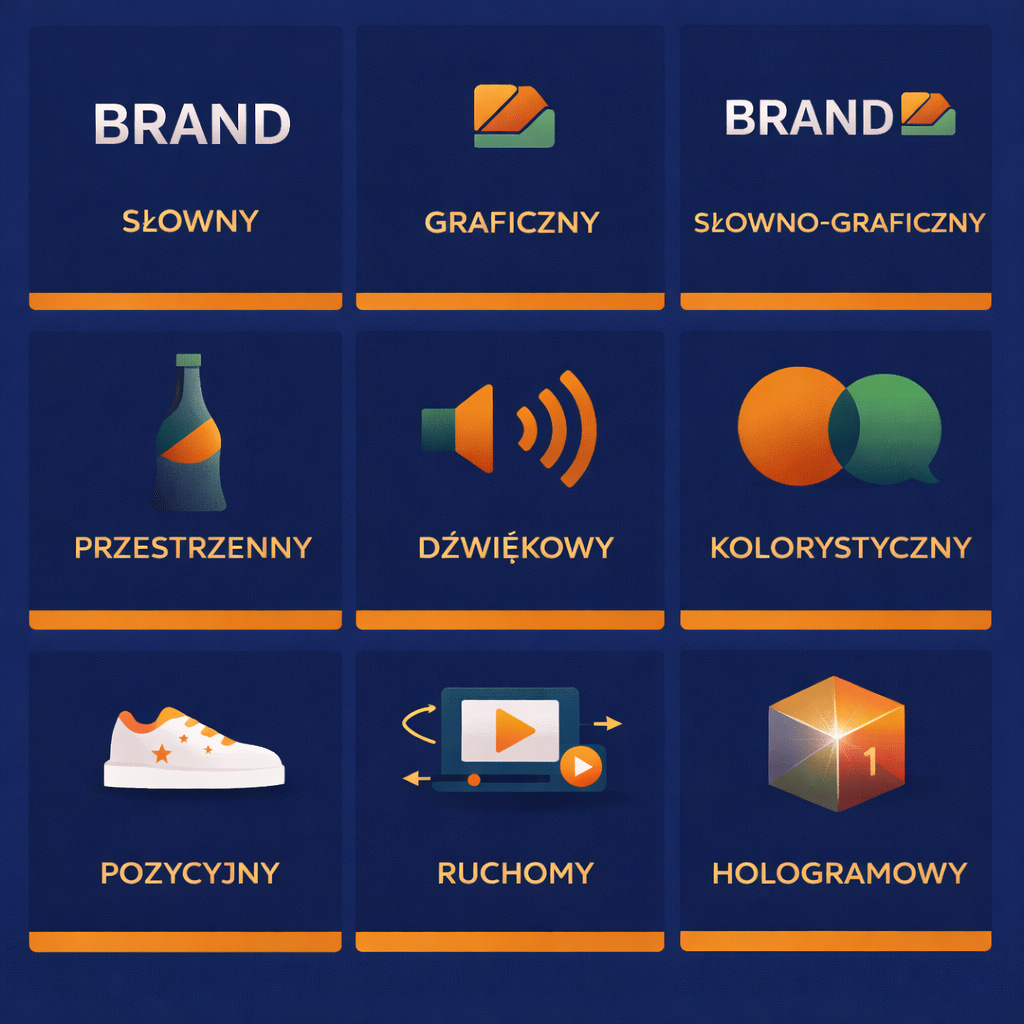
Trademarks are one of the most frequently used, yet also most misunderstood, tools for brand protection. Many people associate them solely with logos, whereas in practice, a trademark can take on a completely different form, and the choice of its type has a real impact on the scope of protection, costs, and the effectiveness of enforcing rights.
How to protect trademarks?

Utility model vs. industrial design – what are the differences and how can you protect them?

Utility models and industrial designs are fundamental tools for protecting solutions used in products. They are often confused with each other because both relate to the same object and both are registered with the relevant office. In practice, however, they protect completely different elements of the product, operate within different scopes, and address different business needs.
The differences between utility models and industrial designs are outlined below in a systematic way, so that it is easy to assess which form of protection makes sense in a given case, and when it is worth considering combined protection.
Prepare to submit the trademark application