




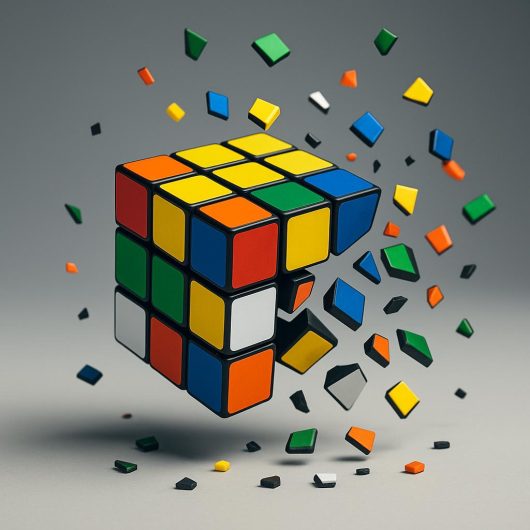
The dispute concerned several three-dimensional EU trademarks depicting the shape of a Rubik's Cube. These rights were registered between 2008 and 2012, but Verdes Innovations SA – a competitor in the puzzle market – applied for their invalidation. The argument was based on Article 7(1)(e)(ii) of Regulation 2017/1001, which excludes from registration signs if their essential characteristics are solely determined by the technical function of the product. According to the applicant, the shape of the cube and the visible grid of lines dividing it into smaller squares are directly related to the mechanism of the cube – enabling rotation around an axis and independent movement of rows and columns. The Court of Justice of the EU agreed with this argument. It emphasized that the purpose of trademark law is to protect signs that allow consumers to distinguish the goods of one undertaking from those of other undertakings, and not to protect technical solutions, which should be subject to time-limited protection through patents or industrial designs.
The ruling aligns with established case law, notably the judgment of the Court of Justice of the European Union in the case of Simba Toys v. EUIPO (C-30/15 P). In that case, the CJEU held that when assessing three-dimensional trademarks, it is necessary to consider not only the visible features but also the technical elements that may be invisible but determine the form of the product. Significantly, the EU Court rejected the EUIPO's argument that the color differences of the cube's walls constituted a significant element of the mark. It noted that the representations of the marks in the applications did not clearly depict these differences. However, even without this feature, the remaining elements – the shape of the cube and the grid of divisions – were sufficient to consider them functional and exclude them from protection. In its reasoning, the court clearly emphasized that granting indefinite protection to technical elements under trademark law would lead to circumventing the provisions on patents and designs, which provide for temporary limitations on the monopoly.
For Spin Master, which acquired the rights to the Rubik's Cube for $50 million in 2021, the ruling represents a significant blow. The loss of shape protection as a trademark in the European Union means that products with almost identical appearances may appear on the market, making it more difficult to defend its competitive position. Although copyright or design protection may provide some degree of protection, they are much weaker and time-limited. The ruling also has broader implications for the industry. For manufacturers of toys and consumer goods whose products have achieved iconic status, it sends a clear message: functionality takes precedence over recognizability in the eyes of EU trademark law. Even the most famous product will not receive indefinite protection if its form is inextricably linked to its function.
The ruling provides valuable guidance for lawyers and patent attorneys. First, when registering a 3D trademark, it is essential to carefully consider how it is presented, clearly distinguishing between aesthetic and functional elements. Second, a trademark cannot be treated as a tool to obtain unrestricted, indefinite protection for the technical features of a product – the law clearly opposes such practice. Third, during due diligence in transactions involving IP rights, the durability of existing registrations should be assessed to avoid investing in rights that are easily challenged.
For Spin Master, the dispute is likely not over – an appeal to the Court of Justice of the European Union is possible, perhaps with an attempt to demonstrate that the color variations of the cube constitute a distinct, differentiating element. However, regardless of the outcome, this ruling already sets a clear direction: shapes resulting from technical function will not be protected as trademarks in the European Union.
Fill out the form, and we will get back to you within the next 1-2 business days with a preliminary quote.