




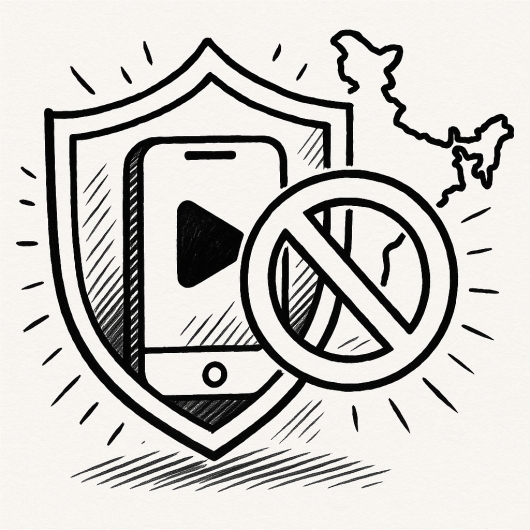
TikTok, a popular short-video app, was banned in India in June 2020, along with 58 other Chinese applications. The Indian government took this drastic measure following military clashes on the India-China border, citing concerns about national security, sovereignty, and the privacy of user data.
Despite its global popularity and an impressive 200 million users in India before the ban, TikTok failed to achieve the prestigious status of a well-known trademark. TikTok Limited applied to have its trademark recognized as “well-known” under Rule 124 of the Trade Marks Rules of 2017, but it received a firm rejection from the Registrar of Trade Marks, who considered not only commercial aspects but also national security concerns in its decision.
The assessment of well-known trademarks in India is based on comprehensive criteria outlined in Section 11(6) of the Trademarks Act of 1999. The Registrar must consider a range of factors, including the extent to which the trademark is known among consumers, the duration and scope of use of the trademark, the promotional and advertising activities undertaken, and documented instances of effective enforcement of trademark rights.
A key aspect is that Section 11(6) allows the Registrar to consider “any fact considered relevant” when determining whether a trademark qualifies as well-known. This broad discretion enables the consideration of factors beyond those explicitly mentioned in the Act, which proved decisive in the negative outcome of the proceedings concerning TikTok.
TikTok appealed the Registrar’s decision to the Bombay High Court, presenting a series of well-reasoned arguments aimed at reversing the unfavorable ruling. The company primarily argued that the Registrar had failed to properly consider the provisions of the Trademarks Act and its related regulations, constituting a violation of administrative procedures. Furthermore, TikTok contended that the Registrar had incorrectly invoked Section 9 of the Act, which deals with absolute grounds for refusal of registration, when Section 11, which regulates matters related to well-known trademarks, was the appropriate section.
The company also emphasized that the ban imposed by the Indian government was temporary and should not be a basis for rejecting the application, especially since TikTok had submitted extensive evidence to support its claim. The most important argument was the failure to analyze the relevant factors mentioned in Section 11(6) of the Act, which, according to TikTok, constituted a fundamental procedural flaw.
In a ruling dated June 10, 2024, a judge from the Bombay court dismissed all of TikTok’s arguments, providing a detailed rationale for the decision. The court emphatically stated that “the ban on the TikTok application by the Government of India, operating under the powers derived from the Information Technology Act and Rules, is indeed a material fact considered by the Registrar.” In its reasoning, the court specifically highlighted that the reasons for the ban relate to “the sovereignty and integrity of India, its defense, and public order,” describing them as “serious matters that cannot be ignored in the context of assessing a trademark.”
This decision underscores how modern intellectual property law must grapple with the challenges arising from globalization, cybersecurity, and geopolitical tensions, demonstrating that national security considerations can outweigh traditional commercial criteria when assessing the status of a trademark.
Fill out the form, and we will get back to you within the next 1-2 business days with a preliminary quote.


