




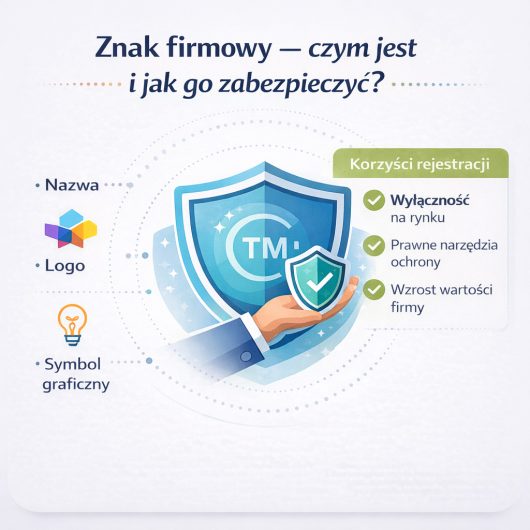
A trademark is any designation that serves to identify an entrepreneur and their goods or services. It can take many different forms, from simple to more complex.
The most common forms of a trademark are:
The key is that the trademark functions primarily in commercial transactions and in the minds of customers. The mere fact that a company uses a particular designation, even for several years, does not necessarily mean that it is effectively protected by law.
This is where one of the most common misunderstandings arises. Many entrepreneurs assume that if:
then the trademark is automatically protected. In reality, such protection is very limited or even illusory.
Real protection of the trademark appears only when it is registered as a trademark. Only then does the entrepreneur obtain the exclusive right to use the mark in a specific territory.
Not every trademark can be successfully registered. The law sets specific requirements, and failure to meet them leads to rejection of the application or later disputes.
A trademark, among other things:
In practice, approximately 30 to 40 percent of trademark applications result in problems, most often due to conflicts with prior registrations. This shows how important it is to prepare properly before filing an application.
If you care about the security of your brand, protection against copying, and the ability to effectively enforce your rights, it is worth considering registering a trademark.
At this stage, it is worth asking yourself a few key questions:
Even at this stage, many ideas that sound good from a marketing perspective are rejected because they have no chance of legal protection.
See more: Free trademark search before registration
This is one of the most important moments in the entire process. The analysis includes:
Trademarks are registered in specific classes of goods and services. There are a total of 45 classes, and each
one covers a different area of activity.
Choosing too narrow a range of classes means gaps in protection. Choosing too wide a range generates unnecessary costs. A well-chosen scope is a compromise between development plans and real business needs.
The application includes:
From the moment of filing, the procedure begins, which takes an average of 6 to 9 months.
After the application is published, third parties have the opportunity to file an opposition to the trademark application.
However, if the trademark passes the formal examination in the chosen office and no objections are raised by the entitled parties, then there is a clear path to registering your trademark!
The most common mistakes include:
Each of these mistakes can result in costs ranging from several thousand to tens of thousands of zlotys.
A trademark is the foundation of a company’s identity and one of the first elements that starts working for the company’s value. Its importance increases with the brand’s recognition
and the lack of protection usually becomes apparent when it is already too late for inexpensive solutions. Formal trademark protection is an investment, not a cost because it provides real tools
to respond to infringements and secures the business’s development for the coming years. The earlier it is implemented, the lower the risk of conflicts and unnecessary expenses. The process of securing a trademark consists of several stages that must work together. Omitting even one of them can negate the effectiveness of the entire protection, even if the trademark has n in use for a longer time.
Fill out the form, and we will get back to you within the next 1-2 business days with a preliminary quote.


